How to Properly Use a single screw fish feed extruder machine?

January 14, 2026

에 대한 최신 회사 뉴스 How to Properly Use a single screw fish feed extruder machine?

Sinking aquatic feed (carp, grass carp, black carp): Enhancing compactness and water resistance. This type of feed needs to sink quickly and remain stable in water without collapsing. The core operation is to increase extrusion pressure and pellet compactness. The die should be selected with a large aperture and a small outlet taper (3-4mm) to increase extrusion resistance; the screw speed should be increased to 350-400 rpm to increase frictional heat and extrusion pressure; the feed rate should be appropriately reduced to ensure the raw material is fully melted and compressed. For example, when producing sinking grass carp feed, a 4mm die, a screw speed of 380 rpm, a feed rate of 80 kg/h, and a cutting speed of 250 rpm produce pellets with a compact structure, sinking speed of 3-5 seconds, and water resistance of over 10 hours. The starch content in the raw material formula can be appropriately increased (e.g., increasing the corn proportion to 40%) to enhance pellet cohesion, while controlling the raw material moisture content at 12%-14% to avoid excessive moisture causing pellet loosening.


Floating aquatic feed (bass, tilapia): Precise control of the puffing degree in a single-screw floating fish feed machine. Floating feed needs good buoyancy and palatability; the core operation is controlling the puffing degree. A die with a small orifice diameter and a large outlet taper (2-3mm) is selected to reduce extrusion resistance and improve puffing effect. The screw speed is controlled at 300-350 rpm, and the feeding speed is increased to 100-120 kg/h to ensure that the raw material has a moderate residence time in the extrusion chamber for full puffing. For example, when producing floating feed for bass, a 2.5mm die, a screw speed of 320 rpm, a feeding speed of 110 kg/h, and a cutting speed of 300 rpm are used. The produced pellets have a moderate puffing degree and a buoyancy rate of over 98%, remaining intact even after 8 hours in water. The moisture content of the raw material needs to be controlled at 10%-12%. Too low a moisture content will lead to over-puffing and brittle pellets; too high a moisture content will result in insufficient buoyancy.


Aquatic fry feed (carp fry, grass carp fry): Fine particle size and gentle extrusion. Fry feed needs to be fine and soft to suit the initial feeding and digestive needs of fry. The core operation is to reduce extrusion intensity and precisely control particle size. A 1-1.5mm small-diameter die is used to ensure the particle size matches the fry's mouth; the screw speed is reduced to 250-300 rpm to reduce frictional heat and extrusion pressure, avoiding over-expansion that results in overly hard particles; the feeding speed is controlled at 50-80 kg/h to ensure the raw material is fully melted but not over-compressed. For example, when producing carp fry starter feed, a 1mm die, a screw speed of 280 rpm, a feeding speed of 60 kg/h, and a cutting speed of 200 rpm produce fine, soft particles with uniform particle size and a protein digestibility rate of over 85%. The raw materials need to be crushed to a finer mesh than 120 and mixed evenly. The proportion of fishmeal can be increased appropriately (30%-40%) to improve the nutrition and palatability of the feed.


에 대한 최신 회사 뉴스 How to Properly Use a single screw fish feed extruder machine?  0

에 대한 최신 회사 뉴스 How to Properly Use a single screw fish feed extruder machine?  1

에 대한 최신 회사 뉴스 How to Properly Use a single screw fish feed extruder machine?  2

About Us


Customer visit


에 대한 최신 회사 뉴스 How to Properly Use a single screw fish feed extruder machine?  3


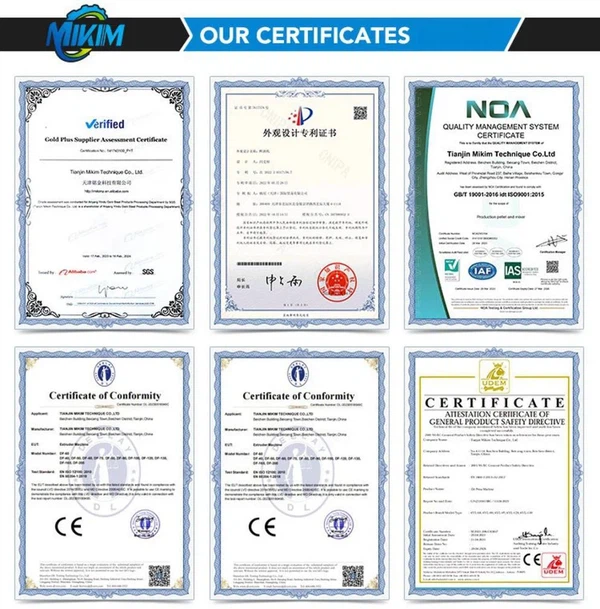
Certificate of Honor


에 대한 최신 회사 뉴스 How to Properly Use a single screw fish feed extruder machine?  4